Perception Systems
Sensor fusion is no longer novel. RGB, depth, thermal, and vibration are combined in research labs and commercial products every day. The real challenge is preserving physical truth under the computational limits of control-layer hardware, where every decision has immediate consequences. That is where our work begins.
Anyone can build perception in the cloud. We build it inside the machine, where latency, reliability, and physical constraints cannot be ignored.
This is not a future ambition. Our systems already deliver physics-grounded perception on industrial control hardware. Through our co-development partnership with Obsero, they operate inside ATEX-classified environments, where correctness is measured by outcomes rather than benchmark scores.
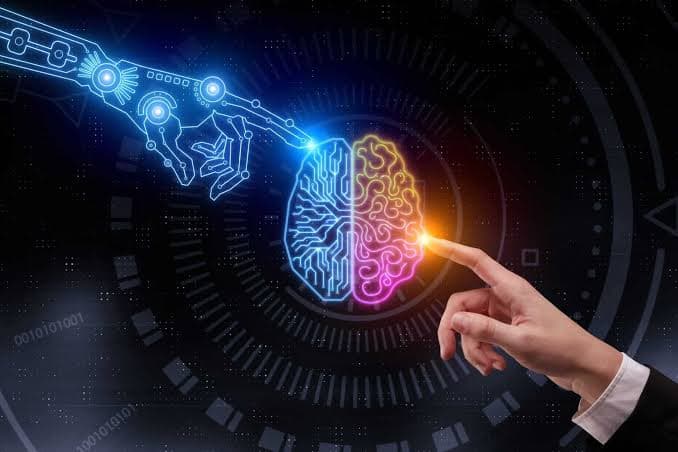
Physical AI does not begin with reasoning. It begins with seeing the world as it is. Every decision, prediction, and action inherits the assumptions made by perception — if those assumptions drift from reality, intelligence becomes increasingly sophisticated while remaining fundamentally disconnected from the world it is meant to act upon. We believe perception is not a component of Physical AI. It is its epistemic foundation. Before a machine can reason about the world, it must first perceive it faithfully.
Intelligence that cannot be trusted about the physical world is not intelligence. It is only a confident guess.
Laboratory conditions do not survive contact with a factory, a vehicle, or a device in a user's hands. Sensors return noisy, partial, and contradictory signals. The decision has a fixed and unforgiving time budget. And the cost of being wrong is not a lower score on a benchmark — it is a person, a machine, or a batch. Most computer vision was built for the first two problems and quietly fails the third. We build for the third.
A model that is confident and wrong is not a weaker version of one that is right. On a factory floor, it is the more dangerous one.
Three integration environments, four outcome classes — RGB, depth, thermal, acoustic, and vibration data fused and interpreted at the edge, from PLC-class controllers to microcontroller-class silicon.
On mobile robots, AGVs, and cobots, we fuse RGB, depth, and motion on-platform so the machine tells a person from a fixed obstacle and reacts before contact — running locally over PROFINET and EtherCAT, within IEC 61508, ISO 13849, and ISO 3691-4.
On fixed equipment, we pair RGB inspection with thermal, acoustic, and vibration signatures to catch defects a single camera misses — calling a developing fault from physical evidence and exposing it over OPC UA, Modbus, and MQTT.
We read vibration, acoustic, and thermal data as measurements of a physical process, not generic time series — interpreting each signature against expected behavior to catch an early failure before it becomes downtime.
On tight compute and power budgets, we design perception that runs entirely on-device — inference stays on microcontroller- and NPU-class hardware, and sensor data never leaves where it was captured.
Talk to our team about real-time threat detection for your environment.